
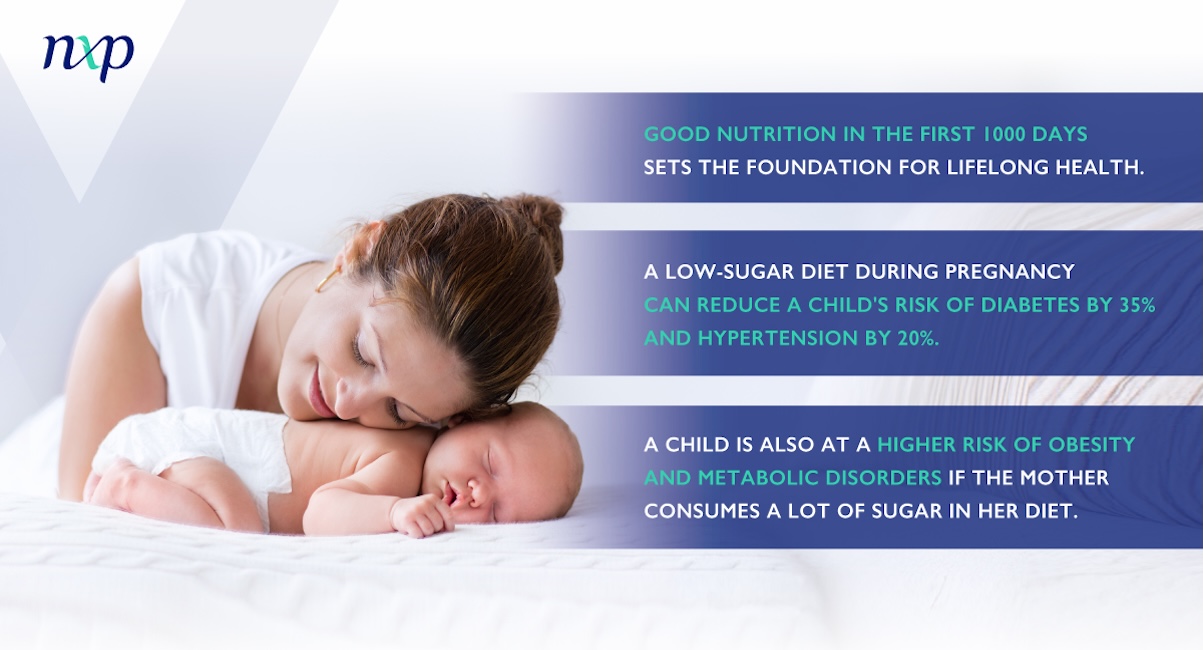
The first 1000 days of life – through pregnancy until the age of two – has a significant impact on health for the rest of the life.
Health for the remainder of life is greatly impacted by the first 1000 days of life, from pregnancy to age two. It appears that feeding a baby a diet low in sugar lowers the likelihood of getting sick and experiencing health problems later in life. A recent study that was published in Science gave an explanation of this. Researchers discovered that consuming less sugar lowers the risk of type 2 diabetes by 35% and hypertension by 20%. Additionally, it appears to postpone the onset of chronic illnesses; for example, individuals who consumed little sugar throughout their first 1000 days of life were four and two years later to develop type 2 diabetes.
According to Tadeja Gracner, one of the researchers, early sugar intake can affect a person’s metabolism for the rest of their life. A child is also at a higher risk of obesity and metabolic disorders if the mother consumes a lot of sugar in her diet. If a child has been exposed to more sugar throughout their early years, there is probably a correlation between their preferences for sugar and sweet meals.
The information was produced as a result of the research team’s analysis of data from both before and after Great Britain’s post-World War II sugar restrictions ended. Access to sugar, fat, bacon, and cheese was restricted when GB started rationing in 1940. The population’s consumption of sugar nearly immediately doubled upon the end of the rationing era in 1953.
The UK Biobank provided data for the study. They contrast the 22,000 conceived immediately following the rationing with the 38,000 conceived just prior.

