
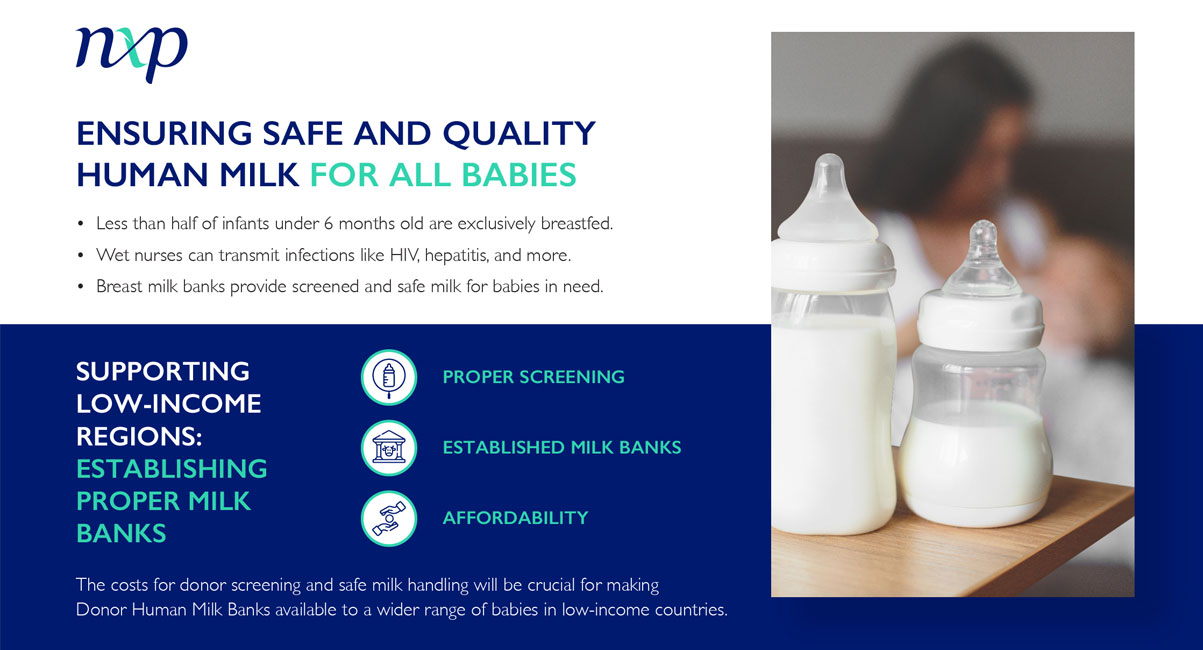
Breastfeeding is the most efficient ways to ensure child health and survival. However, contrary to WHO recommendations, fewer than half of infants under 6 months old are exclusively breastfed. Mothers who cannot breastfeed may have the option to let another mum breastfeed her child. The so-called wet nurses can pass on infections like HIV, hepatitis and yeast, bacterial and viral infections. Also, parvovirus, herpes, rubella and CMV can be transmitted through breast milk. Breast milk banks collect breast milk to provide for babies in need. Reputable banks screen donors and make sure that the milk is transported, processed, stored, and tested to ensure its safety. The World Health Organization states that the first alternative to a biological mother not being able to breastfeed is the use of human milk from other sources.
Human milk banks have now been established in over 60 countries globally, with a small but increasing number of milk banks operating in low-income and middle-income countries. In many low-income regions there may not be any Milk Banks so breastfeeding is arranged directly between mothers. Also, low family incomes make infant formula unaffordable for many mothers. It is therefore particularly important to establish proper Milk Banks in these areas to ensure screenings and availability for healthy breast milk for all babies.
Despite recommendations for donor human milk and the global expansion of human milk banks, little authoritative guidance exists on the implementation, operation, and regulation of human milk banks. The importance of safe operational guidelines and a coordinating body to collate and communicate data have been highlighted by the milk-banking community and emphasised by the current COVID-19 pandemic.
The WHO has prioritized the development of Donor Human Milk Banking Guidelines in 2022-23. A Guideline Development Group (GDG) will review available evidence and advise the WHO on development of guidelines for establishing and implementing safe and quality human milk banking systems. The costs for donor screening and safe milk handling will be crucial for making Donor Human Milk Banks available to a wider range of babies in low-income countries.
#Breastfeeding #ChildHealth #HumanMilkBankgs #InfantHealth #GlobalHealth

